

Agencies have a particular problem: they tell clients to invest in a good website, then run their own on a slow template with a contact form that nobody tracks. A marketing agency website should be the best example of what it sells.
Skalr Marketing is a UK Meta Ads agency. Their website gets 5 organic leads a month and closes 10% of them, and picks up around 5k impressions a week at a 1% click-through rate. It was built to do three things at once: convert cold traffic from live Meta Ads campaigns, rank in organic search, and track every lead accurately.
The three jobs an agency website has to do
Most agency sites do one of these jobs and ignore the others. They look good but have no landing page for paid campaigns, or they rank for nothing because the content is thin, or they run tracking that double counts leads or misses them.
Skalr was designed to cover all three from day one, which is why it is a useful example.
1. A clear message in the first screen
The home page opens with a direct statement of what the agency does: Meta Ads that actually convert. There is no vague "we are a creative agency" line. A visitor knows in seconds what Skalr offers and who it is for, and a single button leads to a strategy call.
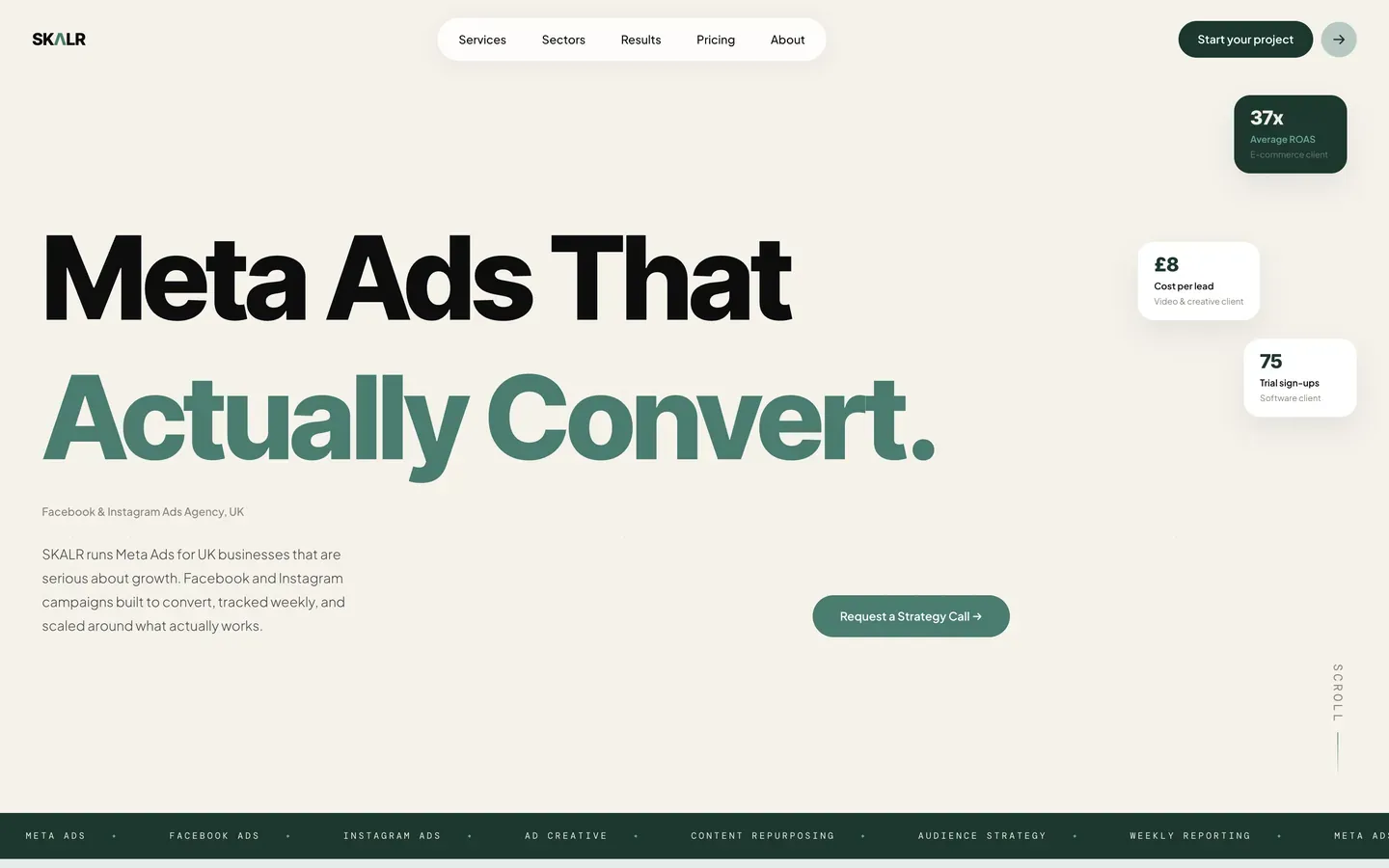
Specific beats clever. If you specialise in a channel or sector, say so.
2. A page for every service
The site has individual service pages for Meta Ads strategy, Facebook and Instagram, ad creative, content repurposing, funnel optimisation and weekly reporting. Each one targets what a potential client might search for, and each one links to the next step.
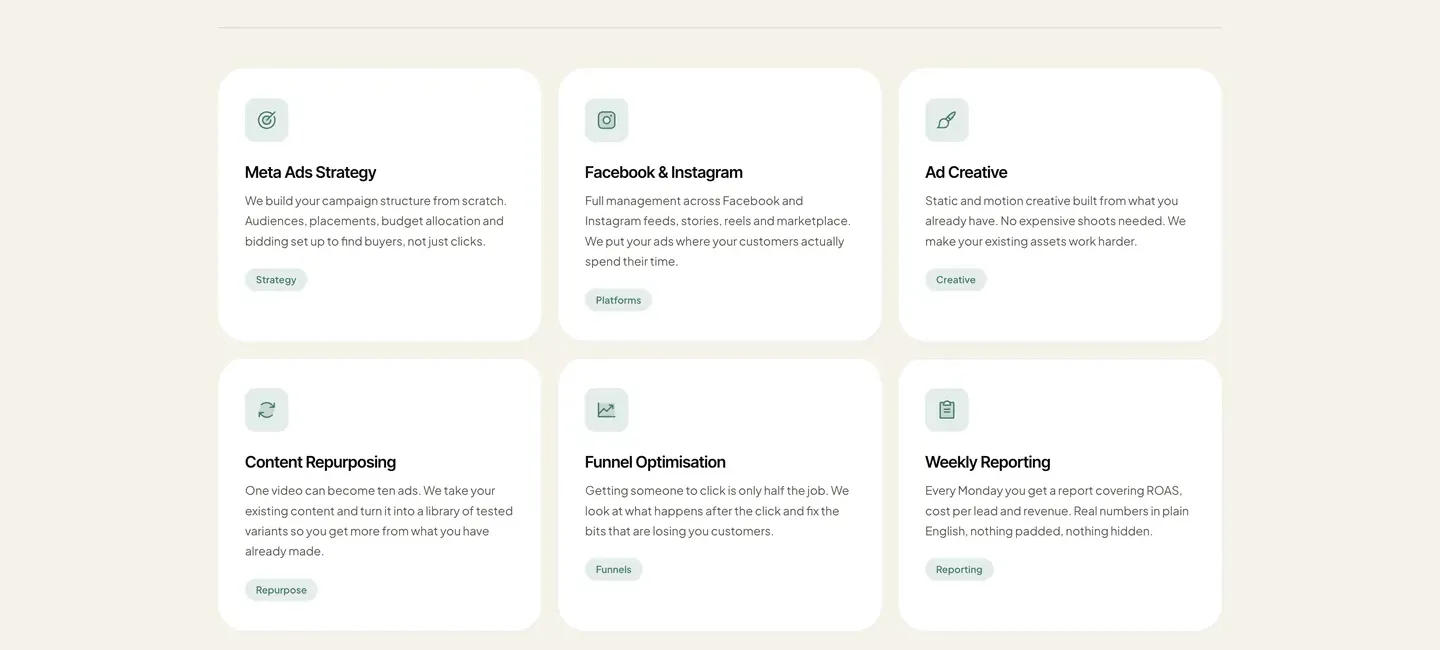
Do not put everything on one "Services" page. Google ranks pages, not websites, and a page about one thing ranks better than a page about everything.
3. Show a simple process
Prospects want to know what happens after they get in touch. Skalr answers with a three-step process: an enquiry and call about the business, a custom campaign plan, and then ads going live with ongoing optimisation.
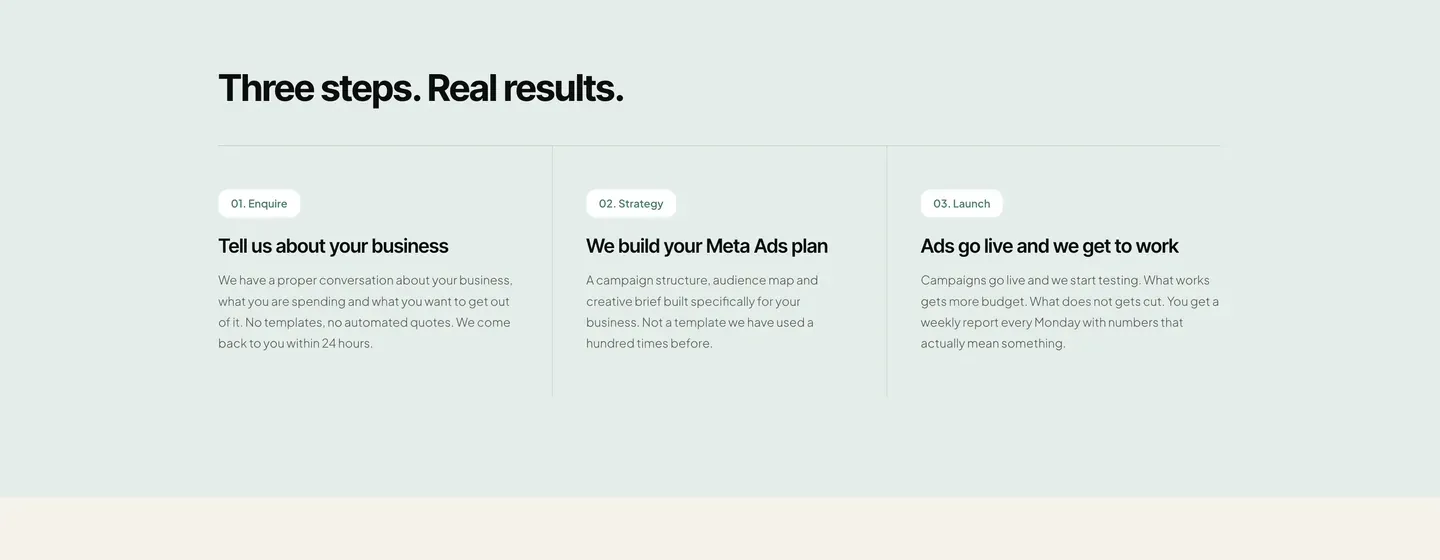
A clear process reduces anxiety and shortens the sales cycle.
4. Sector pages for industries you serve
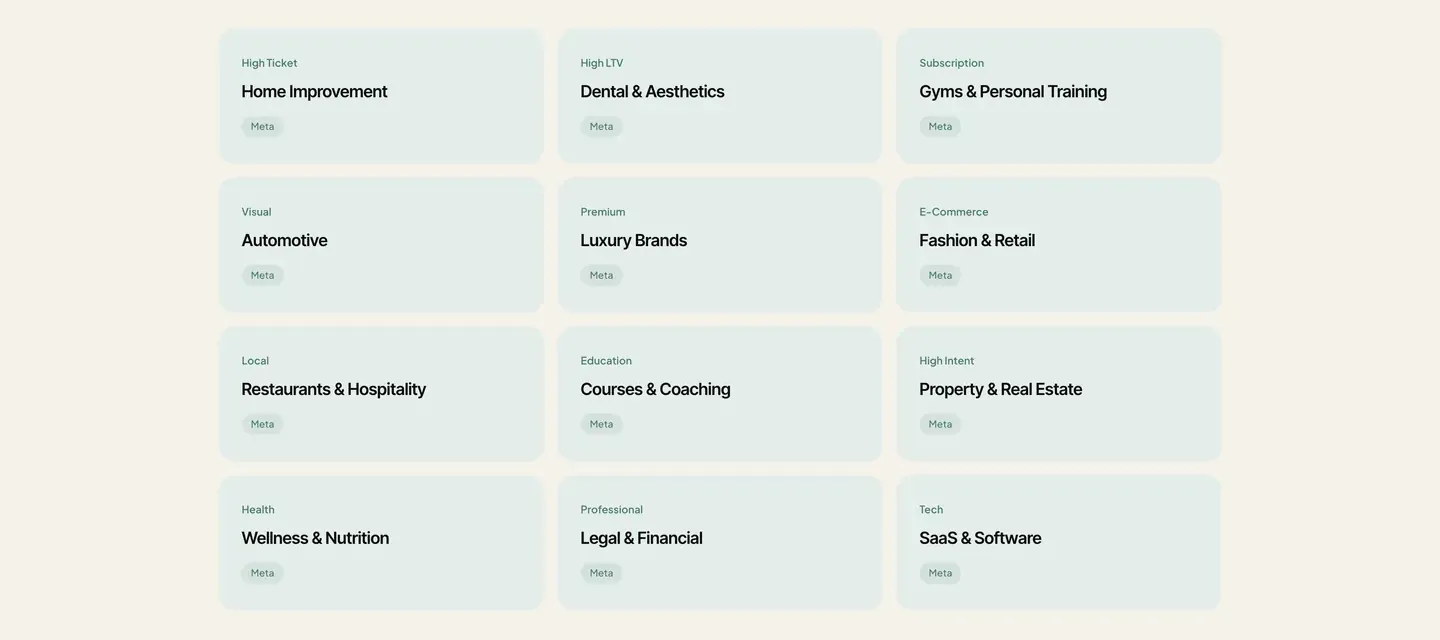
Skalr has sector pages for the industries it works with, such as dental and aesthetics, gyms, home improvement, e-commerce and restaurants. A business owner in one of those sectors sees a page written for them.
5. A landing page built for paid traffic
Paid traffic behaves differently from organic. Visitors have clicked an ad, have little patience and need a focused page. Skalr has a dedicated landing page for paid campaigns, with a single goal, social proof and a sticky call to action that appears as you scroll.
If you send ad traffic to your normal home page, you are paying for clicks and losing them to clutter.
6. Tracking you can trust
For an agency this matters more than design. Skalr runs the Meta Pixel and the Conversions API together. When someone submits the form, the browser sends an event with a unique ID, and the server sends the same event with the same ID after verifying the submission. Meta uses the matching ID to avoid counting it twice, so the data is accurate and robust against browser blockers.
The form is also protected by a CAPTCHA with server-side checks, so spam submissions do not pollute the lead data or the ad reporting.
Your agency website checklist
- 1
State what you do
One clear promise and one call to action in the first screen.
- 2
Build a page per service
Each service targets its own searches and links to the next step.
- 3
Show your process
Three simple steps so prospects know what happens next.
- 4
Add sector pages
Only for industries where you have genuine experience.
- 5
Create a paid traffic landing page
A focused page with one goal for people who click your ads.
- 6
Track properly
Pixel plus server-side events with deduplication, and spam protection on forms.
Typical agency site versus a lead-generating one
| Area | Typical agency site | Lead-generating agency site |
|---|---|---|
| Message | "Creative digital agency" | A specific promise for a specific audience |
| Services | One page listing everything | A page for each service |
| Proof | Logos only | Case studies, process and results |
| Paid traffic | Sent to the home page | Dedicated landing page |
| Tracking | Browser pixel only | Pixel plus Conversions API with deduplication |
Why organic leads matter for an agency
Paid campaigns stop when the budget does. Organic search keeps bringing in leads without additional ad spend. For Skalr, 5 organic leads a month, with 10% closing, is a steady source of new clients. It builds up as the site gains more pages, more content and more authority.
Common mistakes agency websites make
Because agencies understand marketing, their own websites often suffer from over-confidence. These are the mistakes we see most.
- Vague positioning. "We help brands grow" could describe any agency. A specific audience and channel is easier to remember and easier to rank for.
- Case studies with no numbers. Prospects want to see results. Even high-level outcomes are more persuasive than a gallery of logos.
- One contact form for everything. A form that tries to serve ad traffic, referrals and job applicants serves none of them well.
- Tracking that nobody checks. If you have never tested that a submitted form creates a lead event, you cannot trust your reporting.
- A slow site. Paid traffic is expensive. Every second of load time loses visitors you have already paid for.
- Ignoring organic search. Many agencies rely entirely on referrals and ads, and miss a steady stream of inbound leads from search.
Fixing these is usually cheaper than another month of ad spend, and the benefits compound over time.
What it costs
We build agency websites on a fixed monthly price: £49 a month (Starter), £79 a month (Growth) or £149 a month (Scale), plus a one-off £99 setup fee. Hosting, SSL, local SEO setup and monthly edits are included, you see a free demo before you pay, and you can cancel anytime.
Ready for an agency website that brings in leads?
Tracking, SEO and landing pages built in. Free demo first.
See how it worksFrequently asked questions
What should a marketing agency website include?
A clear promise, a page for each service, a simple process, case studies, sector pages where you have experience, a landing page for paid traffic and accurate tracking.
How do marketing agencies get leads from their website?
By ranking for specific service and sector searches, converting paid traffic on a dedicated landing page and tracking every lead so they know what works.
What is the Conversions API and why does an agency need it?
The Conversions API sends conversion events from your server to Meta, alongside the browser pixel. With deduplication, it gives more accurate data and is not affected by ad blockers.
Should an agency have separate landing pages for paid traffic?
Yes. A focused page with one goal converts better than a general home page, and it lets you measure ad performance more clearly.
How much does an agency website cost?
With NexaDesign, from £49 a month plus a one-off £99 setup fee, with hosting, SEO setup and monthly edits included. You see a free demo before paying.


